
Can You Find Your Passport Number Online? Safe Ways to Recover It
Why passport numbers are not publicly searchable and the safe, legitimate ways to recover yours if the document is unavailable.
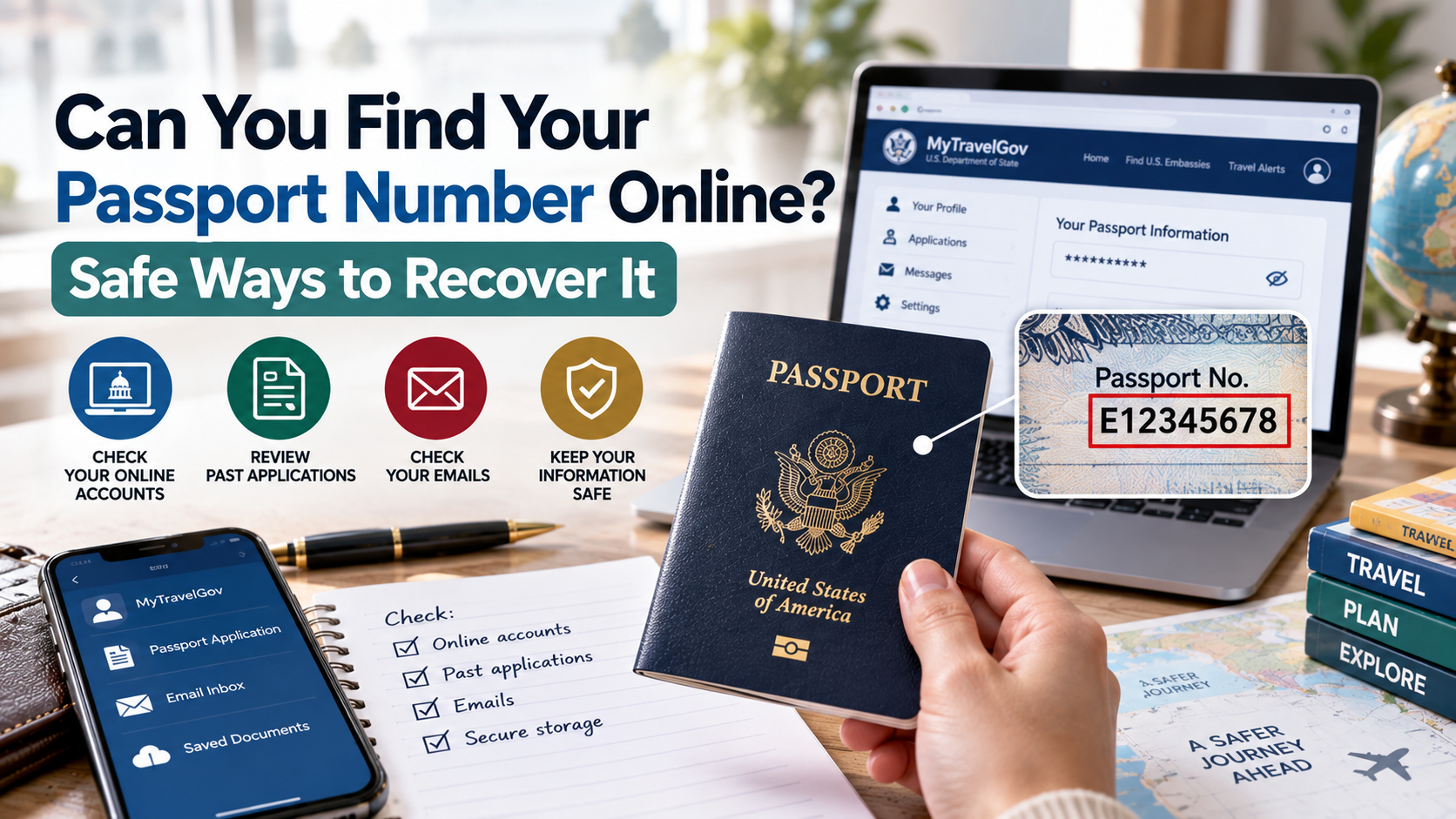
Quick answer: No, you cannot look up your U.S. passport number through a public online search — passport records are protected under privacy law and are not searchable on the internet. The only legitimate ways to recover a passport number you don't have physical access to are: checking a travel profile where you've previously saved it (like an airline app), locating a digital photo or scan you made of your passport's photo page, or submitting a formal records request to the U.S. Department of State, which is free but can take up to 12 weeks. If your passport was lost or stolen, recovering the old number matters less than reporting it immediately and applying for a replacement.
Why This Search Keeps Coming Up
The instinct to search "find my passport number online" makes sense — plenty of other personal records (property records, some court filings, business registrations) really are searchable online in the U.S. Passport data isn't one of them, and understanding why helps explain what your actual options are.
Why Passport Numbers Aren't Publicly Searchable
Passport numbers, combined with a name and date of birth, are sensitive enough to enable identity theft, so they're treated as protected personal data — not published in any public database, and not retrievable by a general web search regardless of how specific your search terms are. Any website claiming to look up a passport number by name alone should be treated as a scam or, at best, a service collecting your personal information for its own purposes rather than actually accessing government records.
Where to Actually Find Your Passport Number
1. On the physical document itself
If you have your passport in hand, the number is printed on the photo page, typically in the upper right corner above your photo. This is by far the fastest option when it's available.
2. A photo or scan you've already made
Many travelers photograph or scan their passport's photo page and store it somewhere secure — a password-protected note, an encrypted cloud folder, or a printed copy kept separately from the passport itself. If you've done this in the past, it's usually the quickest way to retrieve the number without contacting anyone.
3. A travel profile where you've saved it
If you've flown internationally, there's a reasonable chance you entered your passport number into an airline's profile at some point — for example, saving "International Travel Info" in a frequent flyer app. These profiles typically show at least the last four digits, with the full number visible after clicking into the saved record. This works only if you previously entered the number there; it isn't a way to look up a number you never saved anywhere.
4. A formal records request to the State Department
If none of the above apply — passport lost, no saved copy, no travel profile with it stored — U.S. citizens can request their own passport records directly from the Department of State. This is a legitimate, official process, it's free of charge, but it can take up to 12 weeks to process, which makes it a poor option if you need the number urgently for an imminent trip.
If Your Passport Was Lost or Stolen: Priorities Beyond the Number
Recovering the old number is usually less urgent than these steps:
- Report it immediately. For a passport lost or stolen in the U.S., contact the National Passport Information Center. Abroad, report it to the nearest U.S. embassy or consulate. Prompt reporting flags the document in international lookout systems, making it harder for someone else to use it.
- File a police report if it was stolen, which some replacement processes and identity-theft protections may require.
- Apply for a replacement, which generally requires Form DS-11 submitted in person, since a lost, stolen, or damaged passport doesn't qualify for the simpler mail-in renewal form.
- Watch for identity theft signs. A passport number alone isn't enough to open new accounts in most cases, but combined with other personal details it can be misused — monitoring your credit and being alert to unexpected account activity is a reasonable precaution after a loss.
A Note on Storing Your Passport Number Safely Going Forward
Given how sensitive this number is, the safest long-term approach is deciding in advance where you'll keep a secure copy — rather than needing to recover it under pressure later. A photo stored in an encrypted note app, or a printed copy kept in a separate location from the passport itself (not in the same bag), covers most situations without exposing the number anywhere searchable.
A Related Step If You're Applying for a Replacement
If your passport was lost, stolen, or damaged and you're now applying for a new one, you'll also need a fresh, compliant passport photo as part of the DS-11 application. A tool like PhotoOmni can generate one from a selfie in a few minutes, running it through both an AI compliance check and a human review step before delivery — a small piece of the replacement process worth handling early, while you're already dealing with the rest of the paperwork.
FAQ
Can someone else look up my passport number if they have my name and date of birth? No — legitimate passport records aren't accessible through public search, and the U.S. Department of State only releases passport information to the passport holder themselves (or their legal representative) through a formal, verified request process.
Is it safe to email a photo of my passport to myself? It's a common and reasonably safe practice, though using a password-protected note or an encrypted storage app adds a meaningful extra layer of protection compared to a standard email, which can be a weaker link if your email account itself is ever compromised.
Does losing my passport number alone put me at risk of identity theft? A passport number by itself is less immediately useful to a bad actor than a full identity-theft kit (which typically also needs a Social Security number or similar), but it's still sensitive enough to report and monitor for — especially if the physical document was lost alongside other identifying information.
How long does it take to get a replacement passport after reporting one lost? Timing depends on which application route you use and whether you request expedited service; a same-day number recovery generally isn't necessary for this process, since the replacement application itself doesn't require your old passport number to move forward.
Bottom Line
Your passport number isn't something you can look up online, and that's by design — it's protected the same way other sensitive identity data is. If you don't have the physical document, check a saved travel profile or an old photo first; if neither exists, a formal State Department request is the only legitimate path, though it's slow. If the passport is genuinely lost or stolen, reporting it and starting a replacement application — complete with a compliant photo from a tool like PhotoOmni — matters more than recovering the old number itself.