
Visa Photo Upload Requirements for U.S. Travelers: India, Vietnam, Brazil, and China (2026)
A source-checked visual data brief comparing visa-photo upload requirements for India, Vietnam, Brazil, and China.
If you prefer to prepare the file online, the US passport photo maker can help check the crop, background, and passport-photo format before submission.
A data brief for travelers preparing visa applications
A passport photo that works for one application may fail in another. To show where the friction appears, PhotoOmni reviewed the current official photo instructions for four visa routes used by U.S. travelers: India e-Visa, Vietnam e-Visa, Brazil eVisa, and China's online visa application.
This is a source-checked desk-research brief, not a survey and not an estimate of visa approval or rejection rates. Rules can change, so applicants should always confirm them on the linked official portal before submitting.
The headline data: three online systems, three different photo frames
| Route | Application path | Official photo frame | File format and limit | Notable requirement |
|---|---|---|---|---|
| India e-Visa | Online | Square | JPEG; 10 KB–1 MB | Full face, eyes open, no spectacles, plain light/white background |
| Vietnam e-Visa | Online | 4 × 6 cm (2:3) | JPG/JPEG; under 2 MB | Newly taken, white background, no hat or glasses |
| Brazil eVisa | Online | 3.5 × 4.5 cm (7:9) | JPEG/JPG; up to 2 MB | White background, visible shoulders and ears, no spectacles |
| China visa | Online application plus in-person submission | Standard visa photo required | The portal validates an uploaded image | If the upload repeatedly fails, bring a standard ID photo to the visa office |
What makes these four routes different?
- The three fully online routes above use three incompatible aspect ratios: 1:1, 2:3, and 7:9. A generic “passport-size photo” is not a meaningful technical specification.
- India allows a maximum photo file of 1 MB, while Vietnam and Brazil permit 2 MB—a twofold difference in the upload ceiling.
- Across India, Vietnam, and Brazil, the applicant image and the passport biodata page are separate required uploads. A crop from a passport page is not a substitute for a dedicated visa photo.
- China is the workflow outlier: its online system can automatically evaluate an uploaded image, yet a traveler who cannot clear that check may still need a physical standard photo at in-person submission.
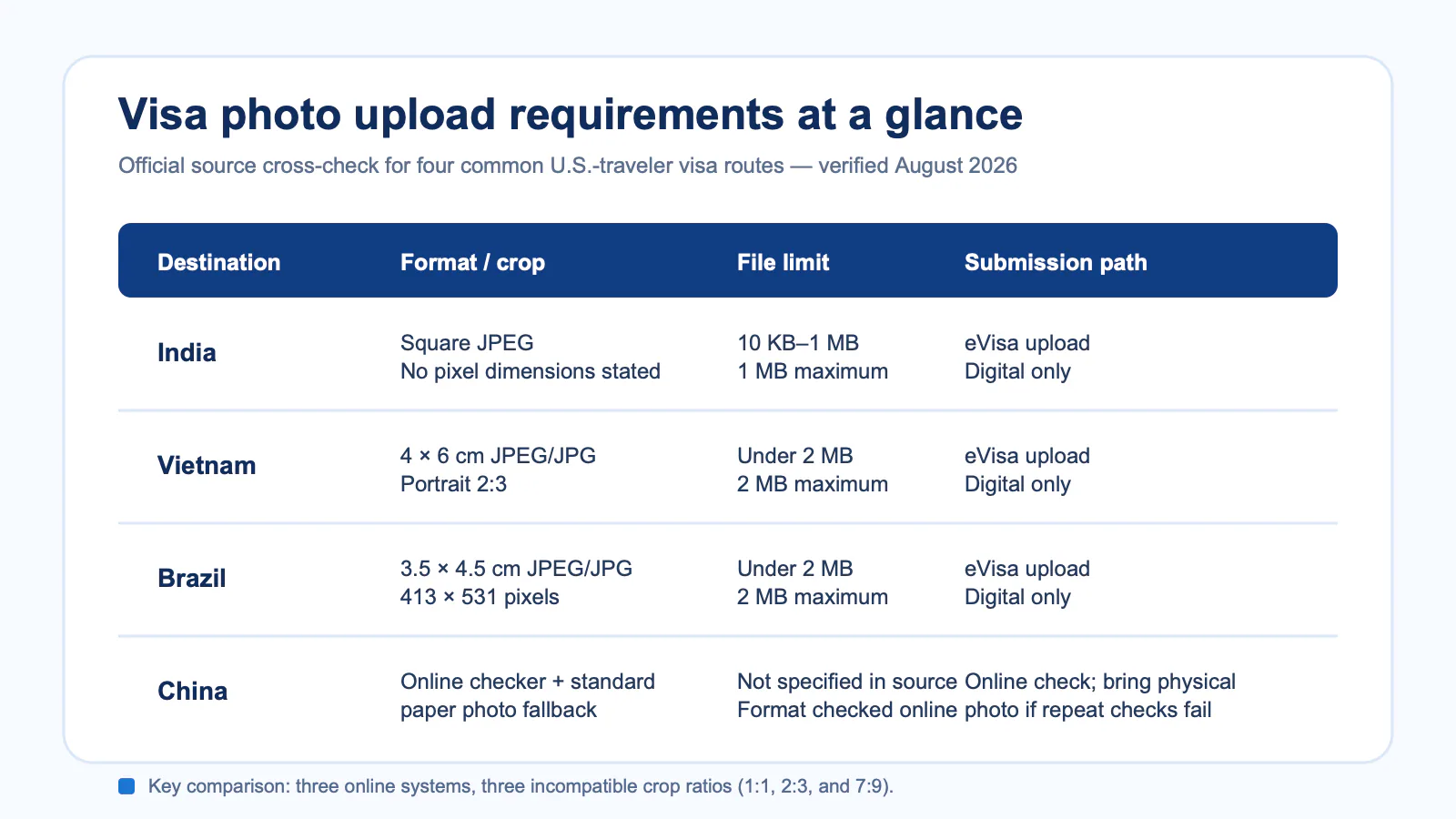
Figure 1. Official technical and workflow requirements at a glance. The comparison is a source-checked summary, not a rejection-rate dataset.
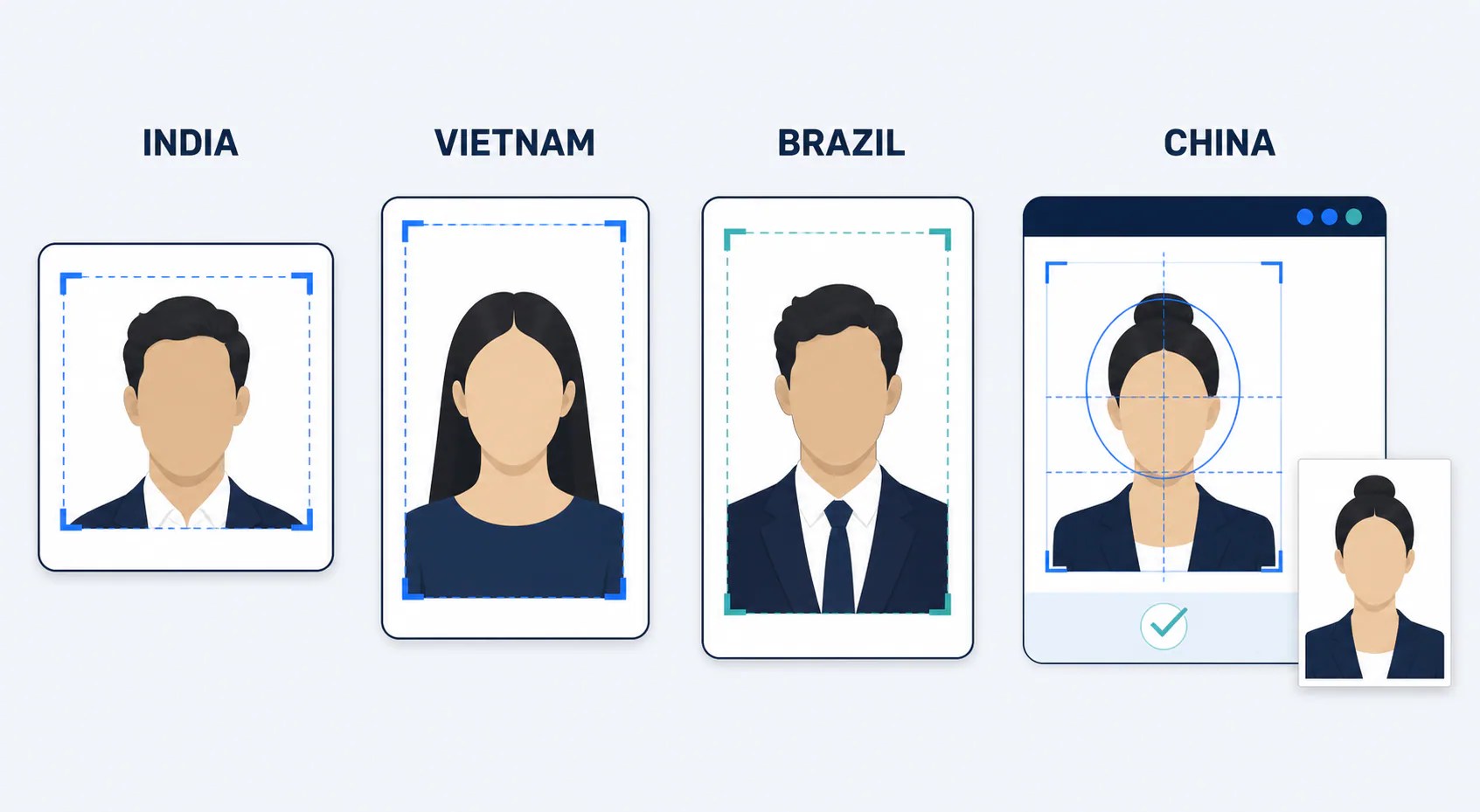
Figure 2. Four routes, four upload workflows. The illustration shows the required frame types only; always use the official portal for the final specification.
1. India: a square image with the lowest file ceiling in this comparison
India's e-Visa portal requires a JPEG photograph between 10 KB and 1 MB. Height and width must be equal. The official instructions also call for a full-face, front-view image with open eyes, no spectacles, a centered head, a plain light-colored or white background, no shadows, and no border. The passport biodata page is a separate upload.
Traveler takeaway: A 4 × 6 cm or 3.5 × 4.5 cm visa image should not be assumed to satisfy India's square-frame requirement without checking the resulting crop and pixels.
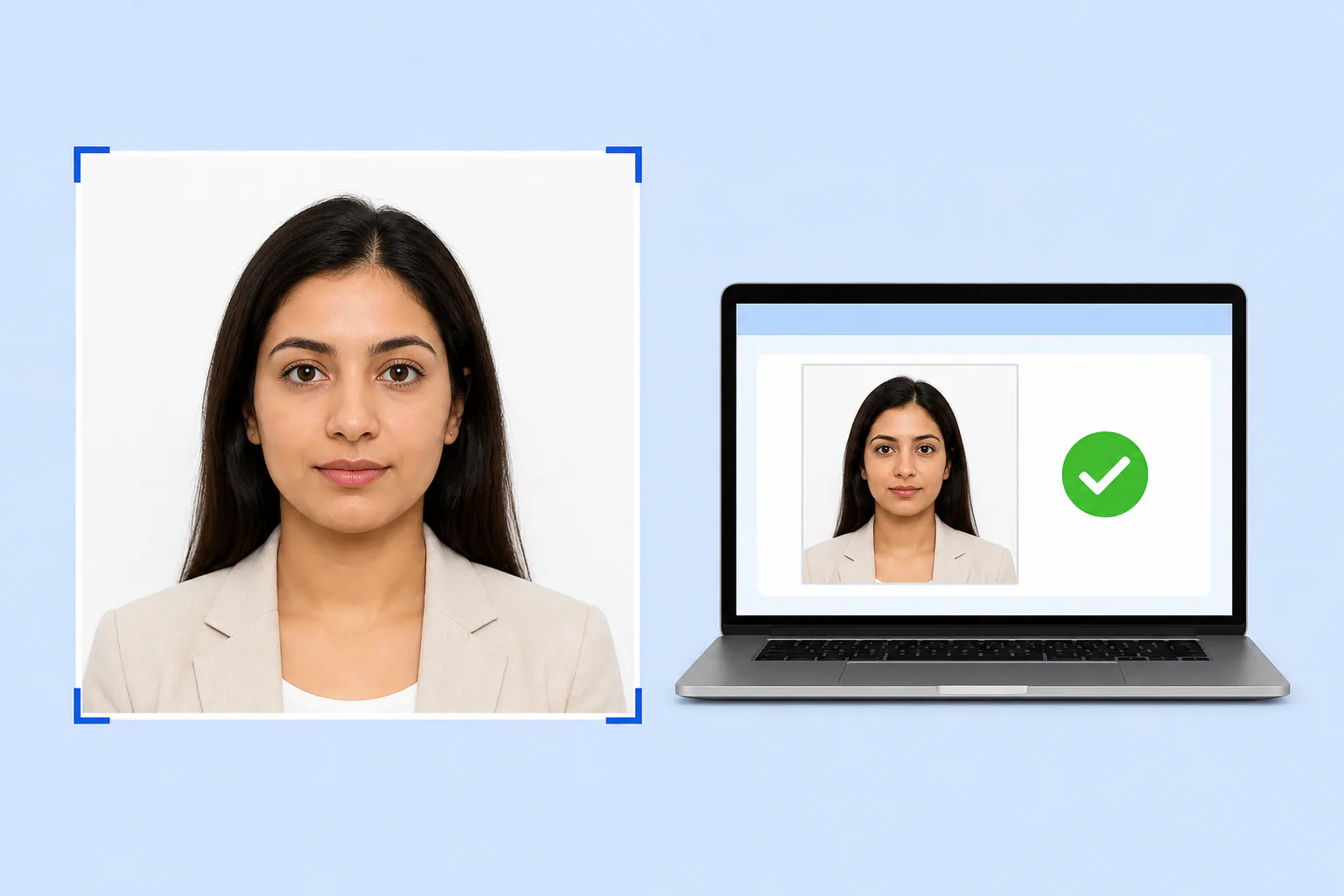
Illustrative example only: this is an AI-generated fictional model, not an official government sample or a real applicant. India requires a square JPEG; verify the current official rules before uploading.
India e-Visa photo requirements
2. Vietnam: a 4 × 6 cm portrait—not a square upload
Vietnam's official e-Visa application form asks for a newly taken 4 × 6 cm portrait in JPG or JPEG format, below 2 MB. It specifies a straight face, formal clothes, a white background, and no hat or glasses. The portal separately asks for a clear image of the passport data page.
A US passport photo maker can apply these dimensions and formatting checks to the uploaded photo.
Traveler takeaway: Vietnam's 2:3 photo frame is materially different from India's square requirement, even though both are online e-Visa applications.
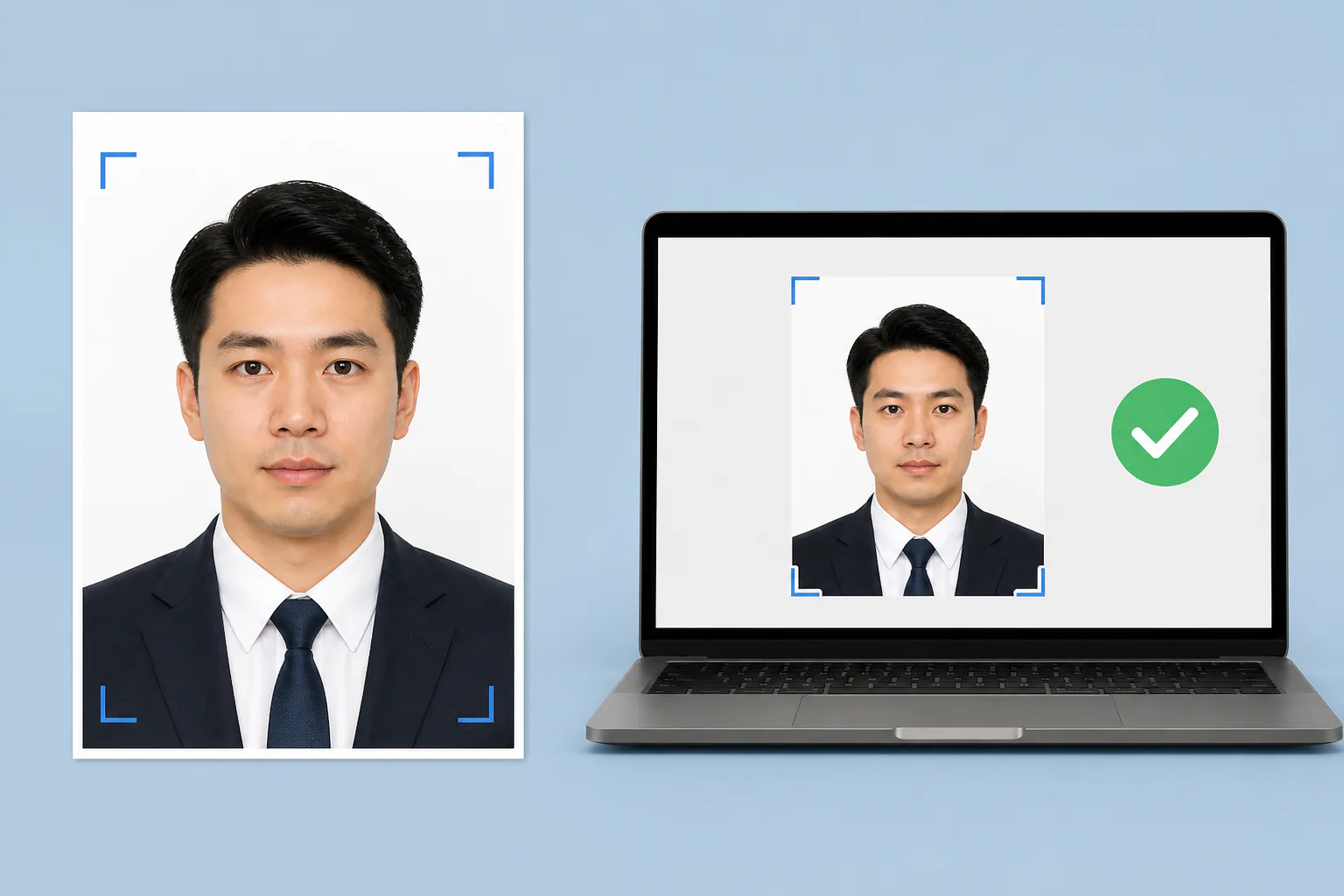
Illustrative example only: AI-generated fictional model, not an official sample or real applicant. Vietnam requires a 4 × 6 cm portrait; verify the official rules before uploading.
Vietnam National Electronic Visa system: photo instructions
3. Brazil: a 3.5 × 4.5 cm image with stricter composition notes
Brazil's official eVisa photo guide calls for a color photo with a white background sized 3.5 × 4.5 cm (413 × 531 pixels). It accepts JPEG and JPG files up to 2 MB. The guide asks applicants to look directly at the camera, keep shoulders in frame, show unobstructed ears, avoid spectacles and headgear, and not smile or show teeth. It specifically says not to crop the photo from the passport biodata page.
Traveler takeaway: Brazil's 7:9 ratio and composition guidance make a simple resize risky if it cuts off shoulders, ears, or headroom.
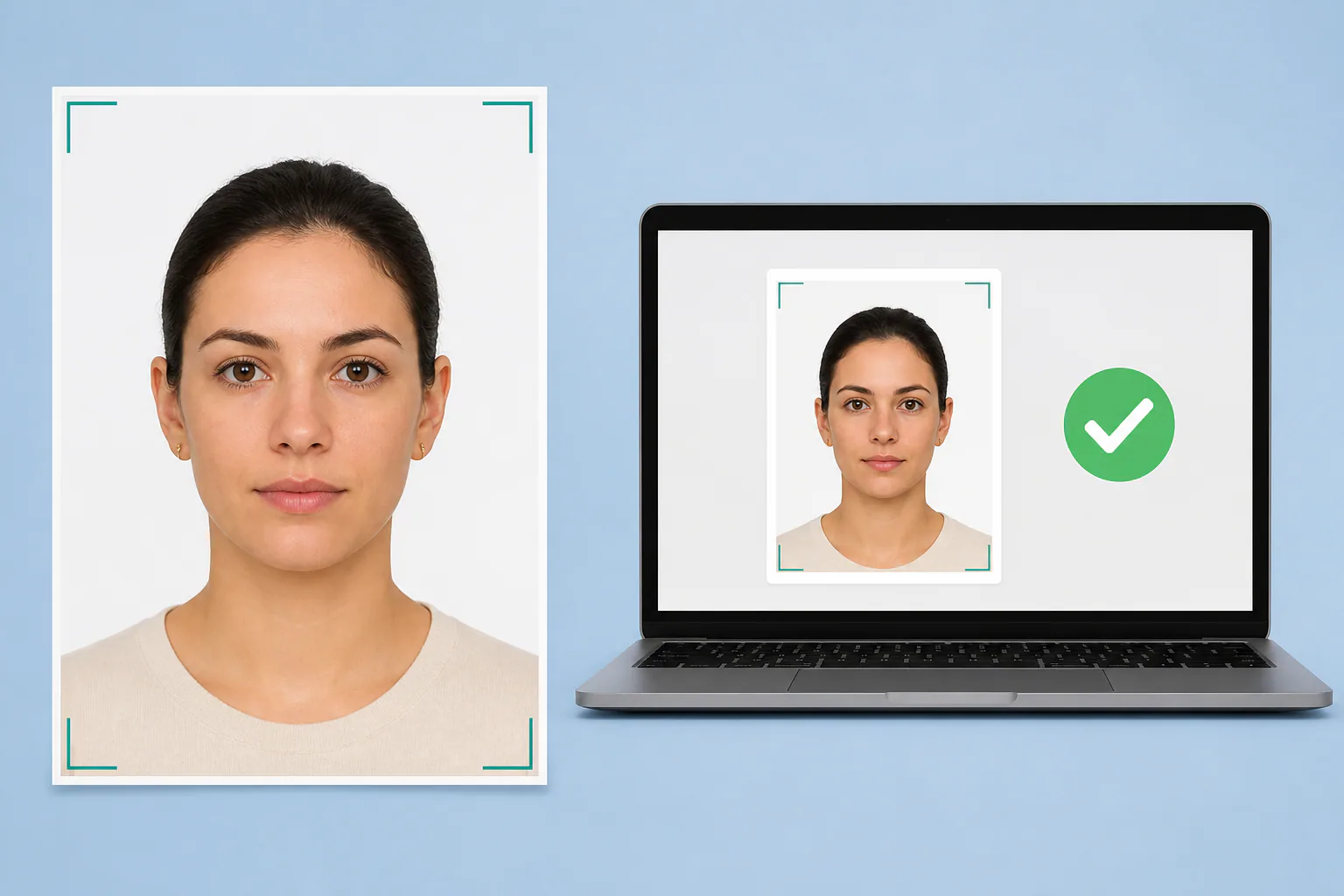
Illustrative example only: AI-generated fictional model, not an official sample or real applicant. Brazil has 3.5 × 4.5 cm framing and composition details; verify the official rules before uploading.
Brazil eVisa official photo guide (PDF)
4. China: an online photo check with a possible physical handoff
China's visa application workflow is not an e-Visa route in the same sense as India, Vietnam, or Brazil. Travelers can begin an online application, where the system supports cropping and automatically determines whether the uploaded photo meets requirements. The embassy says that if an applicant cannot pass after multiple uploads, they may continue the form but should bring a standard ID photo when submitting the passport at the embassy or consulate.
Traveler takeaway: Passing an upload check is part of the process, not necessarily the end of document preparation. Build time for a physical photo if the online check fails.
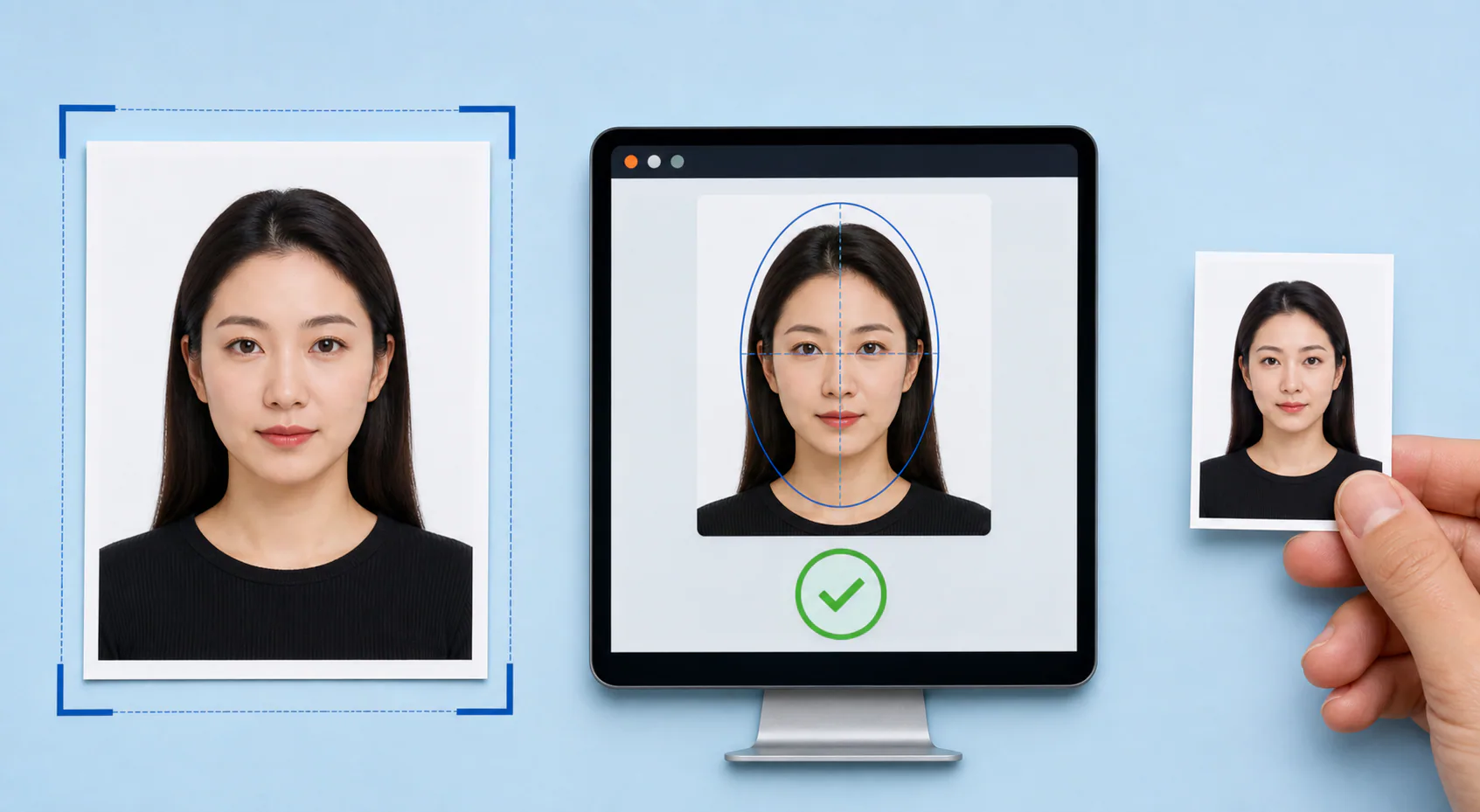
Illustrative example only: AI-generated fictional model, not an official sample or real applicant. It visualizes the online-check and physical-photo fallback described by the embassy; verify the official workflow before submitting.
Embassy of China in the U.S.: online visa application guidance
A practical pre-submission checklist
Before opening a visa application, confirm all five items from the destination's official portal:
- Is the photo square, 2:3, 7:9, or another ratio?
- Is the limit measured in pixels, kilobytes, megabytes, or all three?
- Is the passport biodata page a separate file?
- Does the system require a white background, no glasses, a neutral expression, or specific headroom?
- Is there a physical submission stage if the online upload cannot be accepted?
Methodology and limits
This brief compares instructions that were publicly available on official application portals and embassy pages on August 15, 2026. It covers technical and workflow differences only. It does not measure government approval rates, estimate rejection rates, endorse any visa provider, or replace official guidance. Requirements, eligibility, prices, and processing times can change without notice.
For publication questions or corrections, contact the PhotoOmni Editorial Team.