
Can You Wear a Hijab or Head Covering in a Passport Photo? Religious and Medical Rules
Learn US passport photo exceptions for religious and medical head coverings, signed statements, face visibility and lighting.
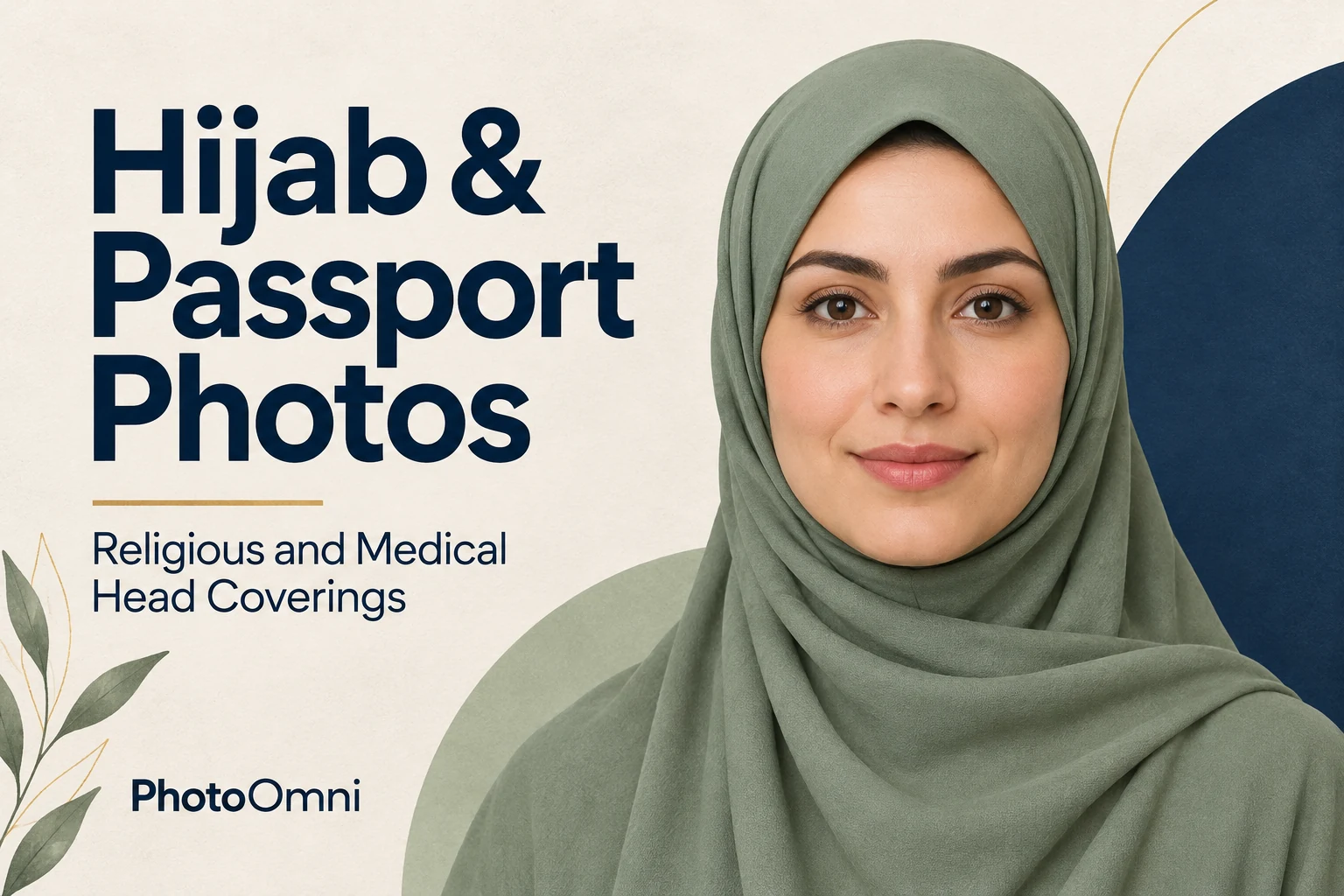
Short answer: yes, but only for documented religious or medical reasons. For a U.S. passport photo you can keep a hijab, turban, kippah or other religious head covering on, or a head covering you wear for medical reasons. You need to submit a signed statement, and your full face must be clearly visible with no shadows.
This guide explains what the State Department says, what your statement should include, how to take the photo, and what to expect if the reviewer has questions.
This article covers U.S. passport photo rules. Other countries have different requirements.
What the State Department Says
The State Department's passport photo rules start from a simple position: take off your hat or head covering. There are two exceptions:
- Religious head coverings: submit a signed statement that says the covering is religious attire worn daily in public.
- Medical head coverings: submit a signed doctor's statement that says you wear it for medical purposes.
If you wear a head covering under either exception, the photo still has to meet these conditions:
- Your full face must be visible. No part of your face can be blocked.
- No shadows. The head covering can't cast shadows on your face.
- One color. The material should be a single color.
- No patterns or small holes. Avoid patterned or perforated fabric.
The official photo page includes an acceptable example of a person in a head covering with their face fully visible, and an unacceptable example where the covering blocks part of the face and casts shadows. The other general rules apply as well: a plain white or off-white background, even lighting, a photo taken within the last 6 months, and no editing or filters.
Religious Head Coverings: Hijab, Turban, Kippah and Others
The rule is the same for any religious head covering, including a hijab, a Sikh turban or a kippah (yarmulke). You keep it on for the photo and submit a signed statement.
What your statement should say
The public photo page asks for a signed statement that the covering is religious attire worn daily in public. A short, truthful statement could include:
- Your full name and date of birth.
- That the head covering in your photo is religious attire connected to your faith.
- That you wear it daily in public.
- How long you have worn it, if you'd like to avoid follow-up questions.
Sign and date it. If you're unsure about wording, contact the National Passport Information Center before you apply.
If you receive a follow-up request
Follow the instructions in any letter or email requesting a statement or additional evidence. Answer truthfully and contact the National Passport Information Center if you are unsure what is required.
Medical Head Coverings
If you wear a head covering daily for medical reasons, submit a signed statement from your doctor saying you wear it for medical purposes. The photo requirements are the same: your full face must be visible and there can be no shadows.
The State Department's photo page doesn't define which coverings count as medical or say what else the note must contain. Ask your doctor to include the wording the State Department uses, that you wear the covering for medical purposes, and keep a copy.
How to Take the Photo
- Frame your face clearly. Your eyes, nose, mouth and chin must be fully visible. A scarf that covers your chin is not acceptable.
- Keep the fabric flat and neat. Folds and draping that cast shadows on your forehead or cheeks can cause problems.
- Use a plain, single-color covering. Patterns and small holes aren't allowed.
- Light your face evenly from the front. A covering can create shadows around your face if the light comes from above or the side.
- Stand in front of a plain white or off-white background. A white head covering against a white wall can blur the outline, so choose a covering in a color that stands out, if you have a choice.
- Don't edit the photo. Do not use filters or software to fix shadows, edges or color.
Face Coverings and Masks
A head covering that frames your face is different from a covering that hides part of your face. The State Department says to take off any face covering or medical mask so your full face is visible. A photo where a veil, scarf or mask blocks part of the face does not meet the requirements.
Online Renewal vs. Paper Application
The same photo standards apply to both:
- Paper application: include your signed statement with your application.
- Online renewal: the State Department's online photo page says to remove anything covering your face unless for documented religious or medical reasons, and it shows an acceptable photo with a religious head covering. It doesn't explain how to submit the signed statement. If a reviewer has a question about your photo, the State Department says it will send a letter or email asking for a new photo or more information. If you're unsure, contact the National Passport Information Center before you submit.
What If I Start or Stop Wearing a Head Covering?
The State Department's guidance on appearance changes doesn't list head coverings. The general rule is that you only need a new passport if you can no longer be identified from the photo in your current passport. If you're not sure, consider renewing with a photo that matches how you look now.
Quick Checklist
- Your signed statement is ready (religious or doctor's statement).
- Your full face is visible, from the eyes to the chin, with nothing covering any part of it.
- The covering is one color, with no patterns or small holes.
- No shadows on your face from the covering or the lighting.
- Plain white or off-white background.
- Photo taken in the last 6 months and unedited.
FAQ
Can I wear a hijab in a U.S. passport photo? Yes, if you wear it for religious reasons. Submit a signed statement that it's religious attire worn daily in public, and make sure your full face is visible with no shadows.
Can I wear a turban or kippah in a passport photo? Yes. The same rule applies to all religious head coverings.
Do I need a signed statement? Yes, for both religious and medical head coverings. A religious covering needs your own signed statement. A medical covering needs a signed statement from your doctor.
Can I wear a head covering for medical reasons? Yes, with a signed doctor's statement that you wear it for medical purposes.
Can I wear a face veil or mask? No. Your full face must be visible.
Can the photo be rejected even with a statement? Yes. The statement doesn't replace the other requirements. If the covering blocks your face, casts shadows or has patterns, the photo can still be rejected.
What if the State Department asks for more information? Follow the instructions in the letter or email, and respond with an honest, signed statement.
Get It Right the First Time with PhotoOmni
A good photo with a head covering is about framing, lighting and a clear view of your face. Use PhotoOmni to prepare a passport photo that follows the official size and framing rules, ready to print or upload. Check your face at full size before you submit, fix any shadows or framing problems, and avoid the delay of a rejected photo.
Create your passport photo with PhotoOmni →
Official Sources
Official guidance checked on October 16, 2026. Follow the current application instructions before submitting.
About the Author
PhotoOmni Editorial Team
The PhotoOmni Editorial Team explains official passport, visa and identity-photo requirements, with practical guidance on taking photos, preparing files and printing. This guide draws on the official sources listed above. The issuing authority sets the application requirements and makes the final acceptance decision.