
Where to Get a Digital Passport Photo and Printed Copies Together
Most in-store options (CVS, Walgreens, Walmart, the post office) hand you printed copies but rarely a usable digital file by default — CVS charges an extra $3–4 for a digital copy, and most others don't offer one at all.
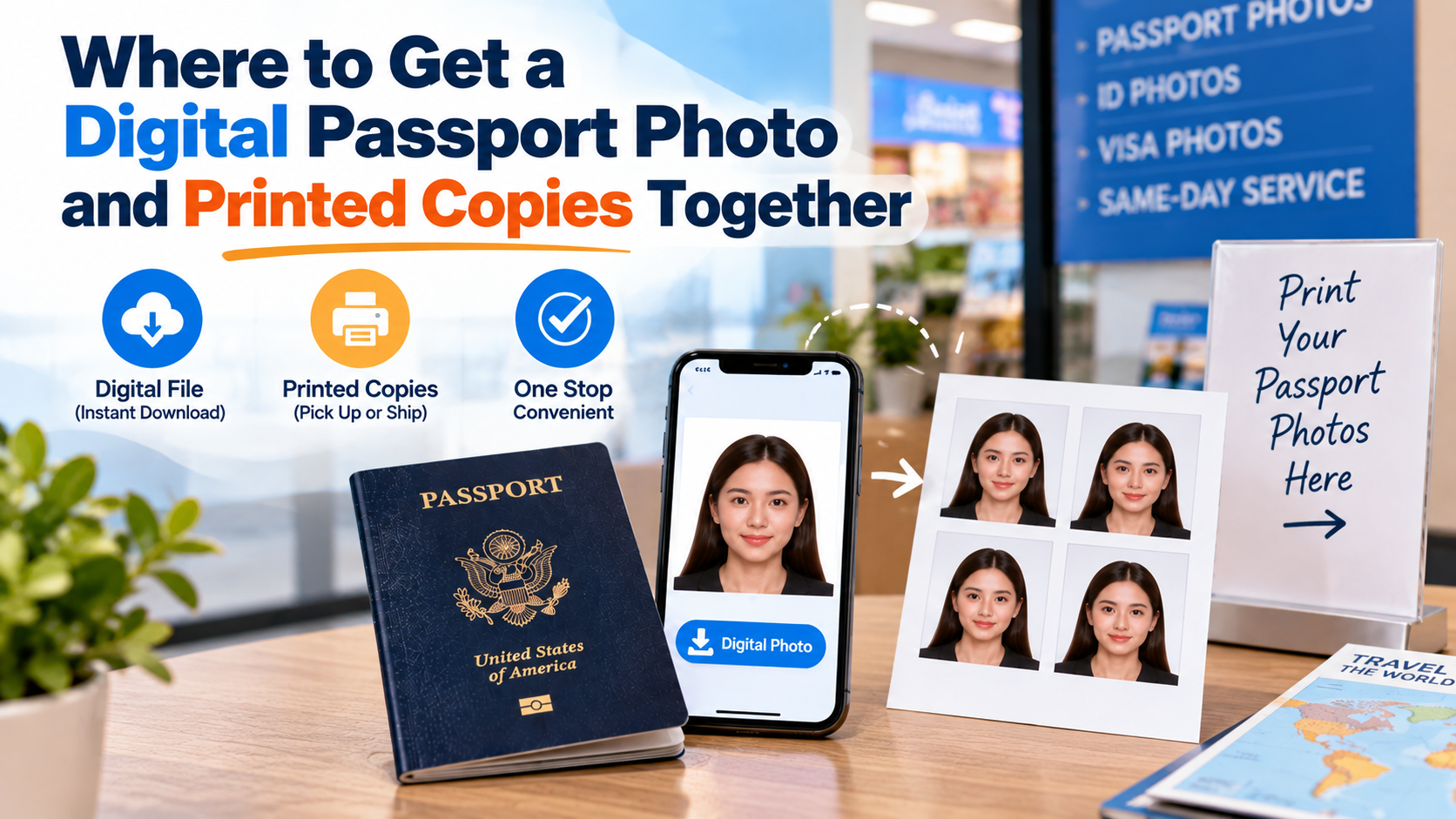
Quick answer: Most in-store options (CVS, Walgreens, Walmart, the post office) hand you printed copies but rarely a usable digital file by default — CVS charges an extra $3–4 for a digital copy, and most others don't offer one at all. Online passport photo services flip this: you get the digital file first (often within minutes), and can then either download it for a digital application or order physical prints shipped to you, typically within 2–3 business days. If you need both a digital file for an online application and physical prints for an in-person one, an online service is generally the more efficient single source — rather than paying twice at two different providers.
Why This Search Comes Up: Two Different Application Paths Need Two Different Formats
More passport and visa processes now accept — or require — a digital photo upload (like MyTravelGov's online passport renewal, or most visa e-application portals), while others still require a physical printed photo submitted in person or by mail. If you're not sure yet which path your application will take, or if you need one format now and might need the other later, sourcing a photo that gives you both from the start avoids paying for two separate photo sessions.
In-Store Options: What You Actually Get
| Provider | Prints Included | Digital Copy | Extra Cost for Digital |
|---|---|---|---|
| CVS | Yes, 2 photos | Available | ~$3.99 extra |
| Walgreens | Yes, 2 photos | Sometimes included, varies by location | Varies |
| The UPS Store | Yes | Not standard | Ask in-store |
| Walmart | Yes, 2 photos | Not standard | N/A |
| Post Office (USPS) | Yes, 1 photo | Not offered | N/A |
The pattern across most pharmacy and retail options: physical prints are the default product, and a digital file is either an add-on fee or simply not offered. If your plan is to apply online and you only get physical prints, you'd then need to scan or photograph the printed photo — which risks introducing quality loss and may not meet a digital application's resolution requirements.
Online Services: Digital-First, Print-Optional
Online passport photo tools generally work the other way around: you upload a photo (or take one through a guided in-app process), the digital compliant file is generated first, and you can then choose to also order physical prints — either shipped to you or as a downloadable print-ready template you print yourself at any pharmacy.
Typical process:
- Upload a photo (not a true selfie — see our guide on phone passport photos for the correct method)
- Automated cropping, background correction, and compliance check
- Download the compliant digital file immediately
- Optionally order physical prints, either shipped (2–3 business days is a common turnaround) or as a print-ready template for local printing
Which Path Makes Sense for You
- Applying entirely online (e.g., an eligible MyTravelGov renewal, or an e-visa)? You only need the digital file — skip physical prints entirely.
- Applying in person or by mail? You need physical prints, but it's still worth getting a digital file at the same time in case a future renewal or a different document ends up needing a digital version.
- Not sure which you'll need, or applying for multiple documents (passport plus a visa, for instance)? Getting both from a single online service avoids paying separately at a pharmacy for prints and then again for a scan or re-shoot to get a digital version.
The Quality Risk of Converting Between Formats Yourself
If you only have physical prints and later need a digital file, scanning or photographing the print yourself introduces real risk — lighting on the scan, slight cropping errors, or resolution loss can all cause a digital upload to fail compliance checks even though the original print was fine. The safer sequence is generating the digital file first, from which physical prints can be reliably derived, rather than the reverse.
Getting Both From One Source
PhotoOmni generates a compliant digital passport photo from an uploaded photo, available for immediate download, with the option to also order properly sized physical prints from the same file — avoiding the need to visit a pharmacy separately or risk quality loss converting a print back into a digital file later.
FAQ
Can I just scan a printed passport photo to get a digital copy? You can, but it's risky — scanning introduces potential resolution, color, and cropping issues that can cause a digital upload to fail even if the original print was fully compliant. Getting the digital file first is more reliable.
Does CVS's digital copy meet online application requirements? It should meet basic resolution standards, but it's worth double-checking the specific pixel dimensions and file size against your application's stated requirements before relying on it, since in-store digital copies aren't always generated with a specific online application's exact spec in mind.
Is it cheaper to get prints and digital separately, or together from one service? Together is usually cheaper and more convenient — paying for prints at a pharmacy and then separately for a digital conversion (or a second photo session) typically costs more in total than an online service that provides both from a single photo.
How long does shipping take if I order physical prints from an online service? Turnaround varies by provider, but 2–3 business days is a common shipping window for physical prints ordered alongside a digital file.
Bottom Line
If you need both formats — or aren't yet sure which one your application will require — sourcing the digital file first and generating prints from it, rather than the other way around, avoids quality loss and duplicate costs. A tool like PhotoOmni provides both the compliant digital file and optional physical prints from the same original photo, which is generally more efficient than a pharmacy visit for prints followed by a separate digital conversion later.