
Visa vs. Passport: What's the Difference and Which One Do You Need?
A passport is issued by your own country and proves your identity and citizenship — it's what lets you leave and re-enter your home country and is required for essentially all international travel.
Quick Answer
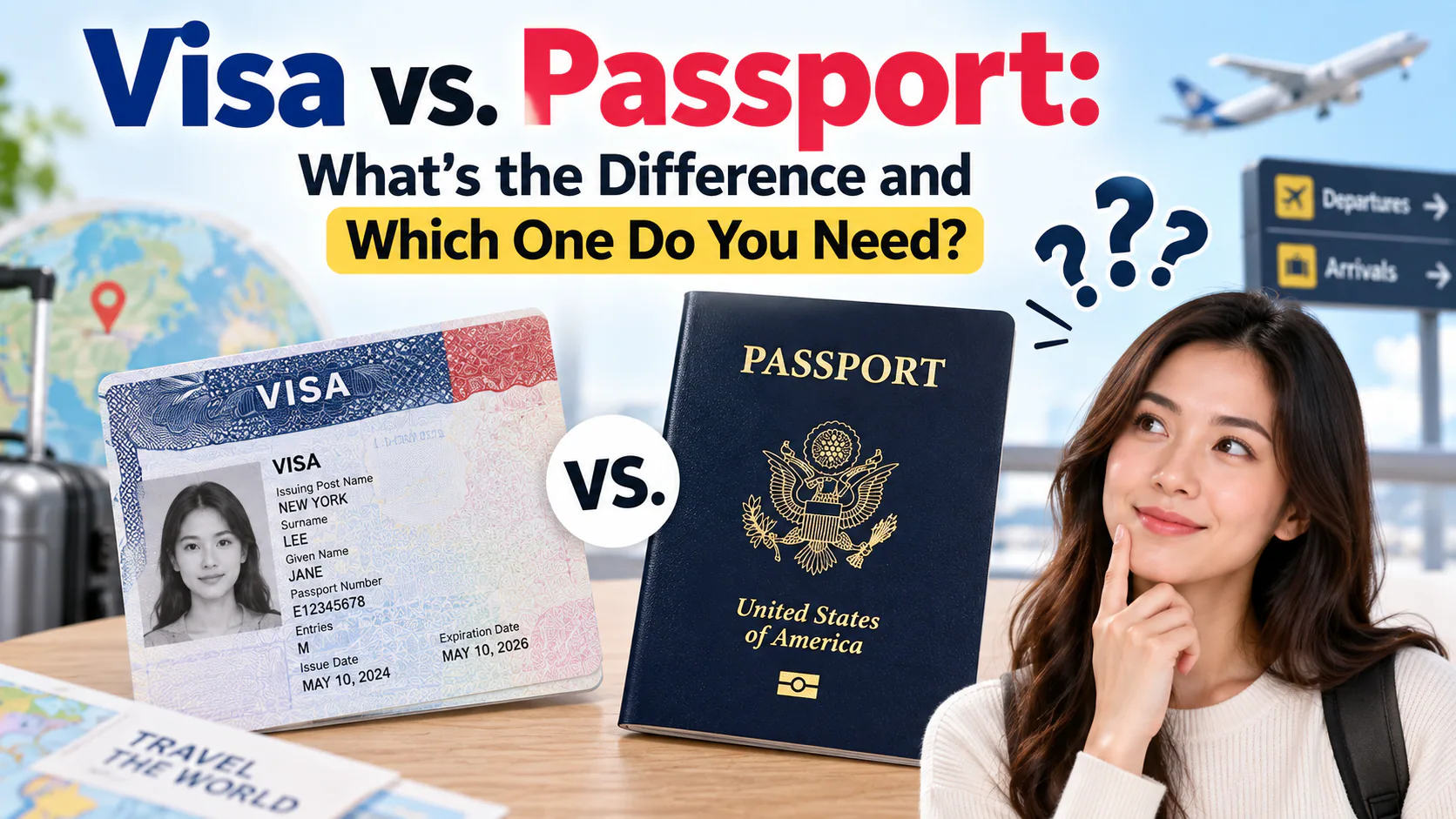
A passport is issued by your own country and proves your identity and citizenship — it's what lets you leave and re-enter your home country and is required for essentially all international travel. A visa is issued by the country you want to visit, and it's permission to enter, stay, or work there for a specific purpose and length of time. In short: your passport says who you are, your visa says you're allowed in. You almost always need a valid passport before you can apply for a visa, since the visa itself is typically stamped or attached inside your passport, or issued as a linked electronic document (e-visa). Whichever one you're applying for, both require a compliant photo — and a tool like PhotoOmni can handle passport, visa, or ID photos in one place.
Passport vs. Visa at a Glance
| Passport | Visa | |
|---|---|---|
| Issued by | Your home country | The country you're visiting |
| Proves | Your identity and citizenship | Permission to enter/stay for a purpose |
| Form | Booklet (or card) | Sticker, stamp, or e-visa document |
| Typical validity | 5–10 years | Days to years, depending on type |
| Required for | All international travel | Only countries that require one for your nationality |
| Can exist without the other? | Yes, a passport works alone for visa-free destinations | No, a visa needs a valid passport to attach to |
When You Need Only a Passport
Many countries have visa-free or visa-on-arrival agreements with certain nationalities. In these cases, a valid passport alone is enough to enter — no separate visa application, though you'll still typically need to show your passport has enough remaining validity (often at least 6 months past your travel dates) and sometimes proof of onward travel.
When You Need Both
For destinations that don't have a visa-free arrangement with your country, you'll need:
- A valid passport, since the visa is what the issuing country stamps or links to it
- A visa matching your purpose of travel (tourist, business, student, work, etc.), obtained from that country's embassy, consulate, or an official e-visa portal
Applying for the visa itself usually requires submitting your passport (physically or as a scan), a visa photo meeting that specific country's requirements — which are sometimes different from your home country's passport photo spec — and supporting documents tied to your purpose of travel.
The Third Category Most Guides Skip: Electronic Travel Authorizations
Passport and visa aren't actually the only two documents you might need — a growing number of countries use a lighter-weight electronic travel authorization (sometimes shortened to ETA) that's neither a traditional visa nor a passport, and most "visa vs. passport" comparisons don't mention it at all. Examples include the U.S. ESTA (for Visa Waiver Program travelers), Canada's eTA, and the EU's upcoming ETIAS. These sit in between: like a visa, they're issued by the destination country and grant entry permission; like a passport, they're checked electronically and don't require an embassy visit or interview. If you're traveling to a country that requires an ETA rather than a full visa, applying for a traditional visa isn't necessary — but skipping the ETA entirely, assuming your passport alone is enough, is a common and costly mistake.
Common Misconceptions
- "A visa is the same as a passport." They're separate documents serving different roles — one proves who you are, the other grants entry permission.
- "You can apply for a visa without a passport." Not usually possible; most visa applications require a passport valid well beyond your planned travel dates.
- "A passport guarantees entry anywhere." It doesn't — a passport identifies you, but the destination country still decides whether to admit you, visa or not.
- "My passport photo will work for my visa application." Not necessarily — visa photo specifications (size, head measurements, background) can differ by country, even when both documents technically use a similar photo type.
Frequently Asked Questions
Do I need a visa to visit every country? No. Many countries offer visa-free entry or visa-on-arrival for certain nationalities, often for short tourist stays. Always check the specific requirements for your passport's country of issue and your destination.
Can my passport and visa photos be the same? Sometimes, but not always — the size, background, and head-measurement requirements can differ between your home country's passport spec and the destination country's visa spec. Check both requirements separately before reusing a photo.
How long before my trip should I apply for a visa? This varies widely by country and visa type — some e-visas process in days, while others (especially work or student visas) can take weeks or months. Passport renewal, if needed, should generally happen well before you start the visa process, since most visas require passport validity beyond your visa's own expiration.
What happens if my passport expires before my visa does? A visa is only valid alongside a currently valid passport it's attached to. If your passport expires, you'll typically need to apply for a new visa in your new passport, even if the old visa's dates haven't technically run out.
Is an e-visa the same as a physical visa stamp? Functionally, yes — an e-visa grants the same entry permission, just issued and stored electronically instead of physically stamped into your passport. You'll usually still need to carry a printed copy along with your passport when traveling.
One Photo Tool for Both
Whether you're renewing a passport or applying for a visa, PhotoOmni can generate a compliant photo for either — just select the document type, upload a selfie, and let AI and a human expert handle the sizing and background. Get started with PhotoOmni and have your photo ready in minutes.