
Can You Wear Glasses in a Passport Photo?
For a new U.S. passport photo, remove your glasses—even if the lenses are clear and show no glare. If you cannot remove them for medical reasons, include a signed note from your doctor with the application. Do not rest glasses on top of your head. These rules come from the State Department's passpor
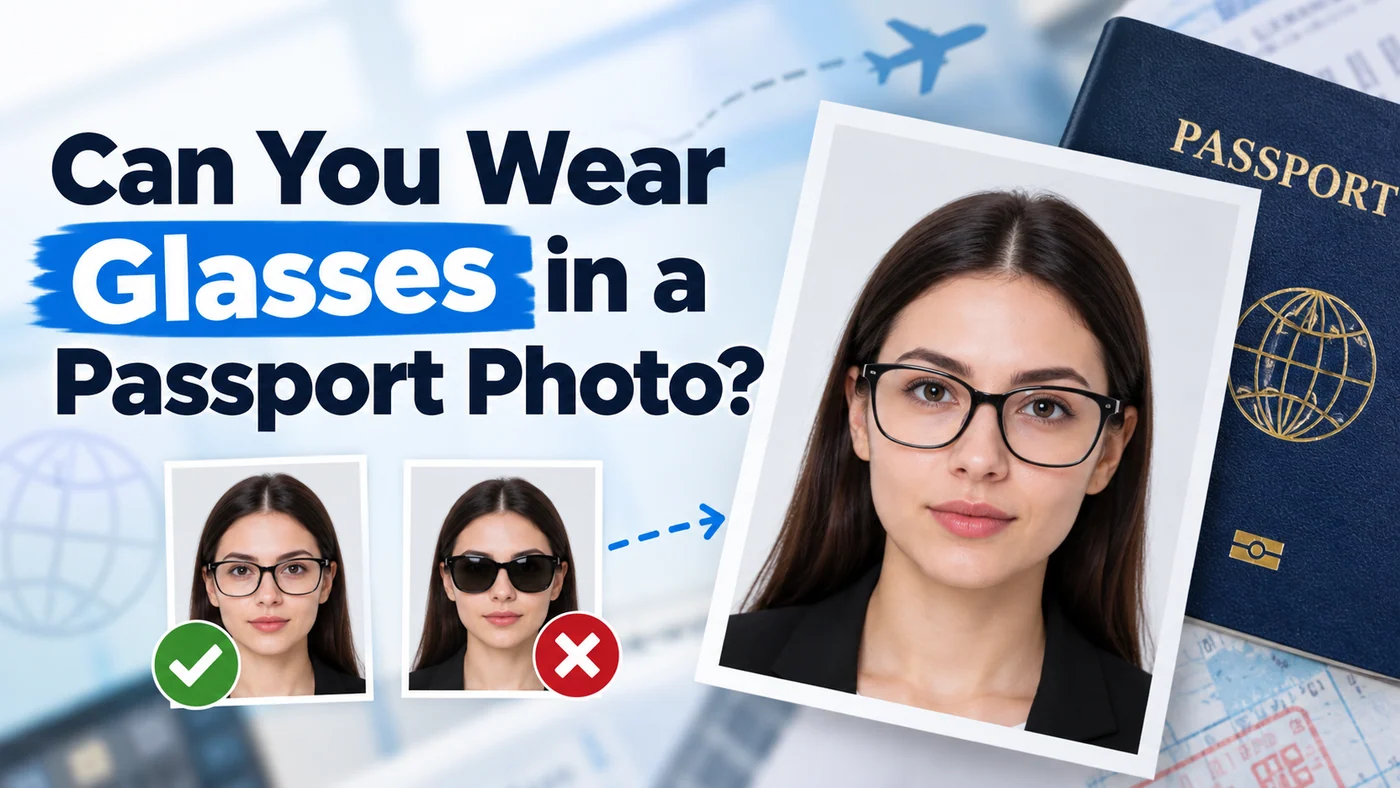
For a new U.S. passport photo, remove your glasses—even if the lenses are clear and show no glare. If you cannot remove them for medical reasons, include a signed note from your doctor with the application. Do not rest glasses on top of your head. These rules come from the State Department's passport-photo instructions, checked November 18, 2026.
The medical exception
A prescription or everyday need to see through glasses is not by itself the same as being unable to remove them for the photo. If there is a medical reason, obtain the signed doctor's statement and follow the authority's instructions. The frames, glare, shadows and refraction must not obscure the eyes. Do not digitally erase frames or reflections; take a new suitable image.
Sunglasses, tinted and transition lenses
Remove ordinary sunglasses and tinted lenses. However, an absolute claim that a medically required dark prescription lens can never be used for a U.S. passport is too broad: the State Department's photo FAQ expressly distinguishes medically needed prescription dark/tinted lenses for passports from the prohibition for visas, and says a medical certificate may be required. Discuss your circumstances with the passport authority rather than transferring the visa answer to a passport application.
Transition lenses may darken during the session. For an ordinary non-exception photo, removing the glasses avoids both tint and frame/glare issues.
Contacts, children and an older passport image
Contact lenses are not spectacle frames, but keep eyes clear and visible and follow the exact document rules. This is not a blanket assurance that every cosmetic lens is acceptable for every country's document. Do not digitally change eye colour.
Children also need the applicable no-glasses or medical-exception process. Keep the face unobstructed and use the official age-specific examples for babies.
An older, otherwise valid passport does not automatically need replacing merely because its photograph shows glasses. A new application needs a new photo meeting current rules. A travel-forum story about surgery is not a direction to wear fake glasses to match an old image; ask the passport authority if your appearance has significantly changed.
Other countries use different wording
| Document | Current guidance |
|---|---|
| U.S. passport | Remove glasses; signed doctor's note if they cannot be removed for medical reasons |
| UK passport | Do not wear glasses unless you have to; if worn, no sunglasses/tint and no obscured eyes, glare, reflection or shadow |
| Canadian passport | Clear prescription glasses may be worn if eyes are clearly visible without glare or obscuring frames; check the full photographer instructions |
Do not label UK or Canadian rules as identical to the U.S. medical-note exception.
Before taking the photo
Remove glasses, keep them off your head, face the camera, use even light and a suitable real background, and inspect the original at full size. If relying on a medical exception, prepare the required statement before submitting. A photo app's pass result cannot waive these rules. PhotoOmni provides electronic-photo preparation for supported documents; the government makes the final decision.
Related Articles
- Passport Photo Rules for Women 2026
- Do Your Ears Need to Show in a Passport Photo?
- Why Was My Passport Photo Rejected?
About the Author
Emma Richardson is PhotoOmni’s Senior ICAO Photo Compliance Expert. With over 12 years of experience, she has helped applicants obtain more than 820,000 passport and visa photo approvals across over 100 countries and territories. She specializes in global passport photo requirements and ICAO-compliant photo verification.