
Why Is My U.S. Passport Red? U.S. Passport Colors Explained
There isn't actually a standard "red" U.S. passport for ordinary citizens — what people usually mean is the maroon (dark reddish-brown) passport issued to U.S. government and military personnel traveling on official business, or the black passport issued to diplomats.
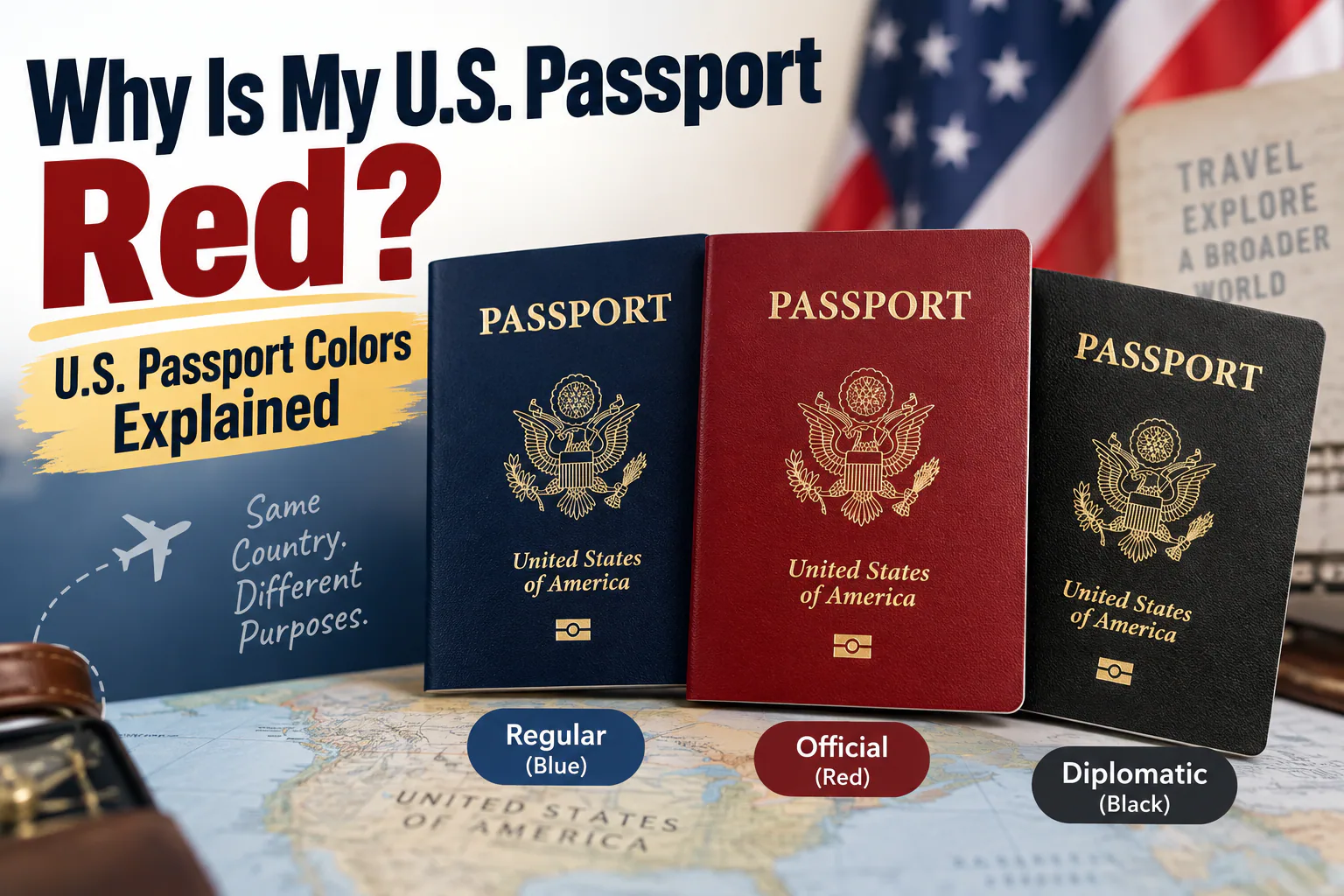
Quick Answer
There isn't actually a standard "red" U.S. passport for ordinary citizens — what people usually mean is the maroon (dark reddish-brown) passport issued to U.S. government and military personnel traveling on official business, or the black passport issued to diplomats. Regular tourist and citizen passports have been navy blue since 1976, matching the star field on the American flag. If your passport looks maroon or brownish-red rather than blue, it's almost certainly an official passport, not a personal one — and it typically means you're a government employee, contractor, or military service member required to carry it for official travel, alongside your regular blue passport for personal trips.
The Actual Colors of U.S. Passports
| Color | Who Gets It | Purpose |
|---|---|---|
| Blue (navy) | Regular citizens | Standard personal/tourist travel — most common by far |
| Maroon (often called "red") | Government/military personnel and their families | Official, non-diplomatic government business travel |
| Black | Diplomats and their families | Diplomatic assignments overseas |
| Light green | Refugees living in the U.S. | Refugee Travel Document — doesn't indicate U.S. citizenship |
If someone tells you they have a "red passport," they almost always mean the maroon official passport — true bright red is not and has never been a standard modern U.S. passport color, which is a common point of confusion online.
Why "Red" Is the Wrong Word (But Everyone Uses It Anyway)
The maroon official passport reads as a dark brownish-red in most lighting, which is why it gets called "red" in casual conversation — but it's officially described as maroon, not red. This naming mismatch is one of the most common sources of confusion in searches about U.S. passport colors, and most guides don't clarify it directly, instead jumping straight to "here's what maroon means" without addressing why people are searching for "red" in the first place.
A Brief History of U.S. Passport Colors
- 1926–1941: Red
- 1941–1976: Green
- 1976–present: Blue (changed for the Bicentennial, to match the American flag)
- April 1993–March 1994: Briefly green again, to mark the 200th anniversary of the U.S. Consular Service
So the confusion about "red" U.S. passports isn't entirely baseless — the U.S. genuinely did issue red passports for citizens, just not since 1941.
A 2026 Update: The Commemorative "America250" Design
As of mid-2026, the State Department has begun issuing a limited-edition commemorative passport to mark the 250th anniversary of American independence, available only through the Washington Passport Agency while supplies last. This edition changes some of the interior artwork and cover text layout, but it does not change the outer blue cover color for standard citizen passports — those applying online or through other passport agencies continue to receive the existing standard blue design. If you're researching passport colors in 2026, this commemorative rollout is worth knowing about simply because it's new enough that a lot of older "passport colors" content online hasn't caught up to it yet.
What Other Countries' Passport Colors Mean
Since global passport-color comparisons often come up alongside "why is my passport red" searches, here's the broader pattern:
- Red/burgundy: Common across the European Union, and in countries with historical Communist ties (like China) or that aspire to EU membership (Turkey)
- Blue: Common across the Americas and Oceania — often called the "New World" color
- Green: Common in countries where green holds religious significance (Saudi Arabia, Pakistan, Morocco) and across parts of West Africa and the Middle East
- Black: Less common overall, frequently reserved for diplomatic passports rather than general citizen use
Frequently Asked Questions
Is there any version of a regular U.S. citizen passport that's actually red? No — regular U.S. citizen passports have been blue since 1976. A maroon/reddish passport belongs to someone traveling on official (non-diplomatic) government business.
Why do some U.S. government employees carry two passports? Because their maroon official passport is only valid for official government travel — they still need a separate blue passport for any personal international trips.
Does passport color affect how a country treats you at the border? Generally no for ordinary travel — visa requirements and entry rules are tied to your nationality and passport type (diplomatic, official, or regular), not the cover color itself, though diplomatic and official passports can carry different privileges depending on bilateral agreements.
Will my regular passport turn into the Trump commemorative design automatically? No — the commemorative "America250" version is only issued to those who apply in person at the Washington Passport Agency while the limited stock is available. Online renewals and other passport agencies continue issuing the standard design.
How do I know if my passport is an official (maroon) one versus a personal one? The cover color itself is the clearest indicator — maroon/dark reddish-brown means official government business use, while navy blue is the standard personal passport nearly everyone else carries.
Your Photo Needs to Match the Passport Type You're Applying For
Whether you're applying for a standard blue passport or an official one, the photo requirements are the same 2×2" U.S. standard. Try PhotoOmni — upload a selfie, and get it automatically resized and background-corrected, with a human expert reviewing the result before you download or print it.